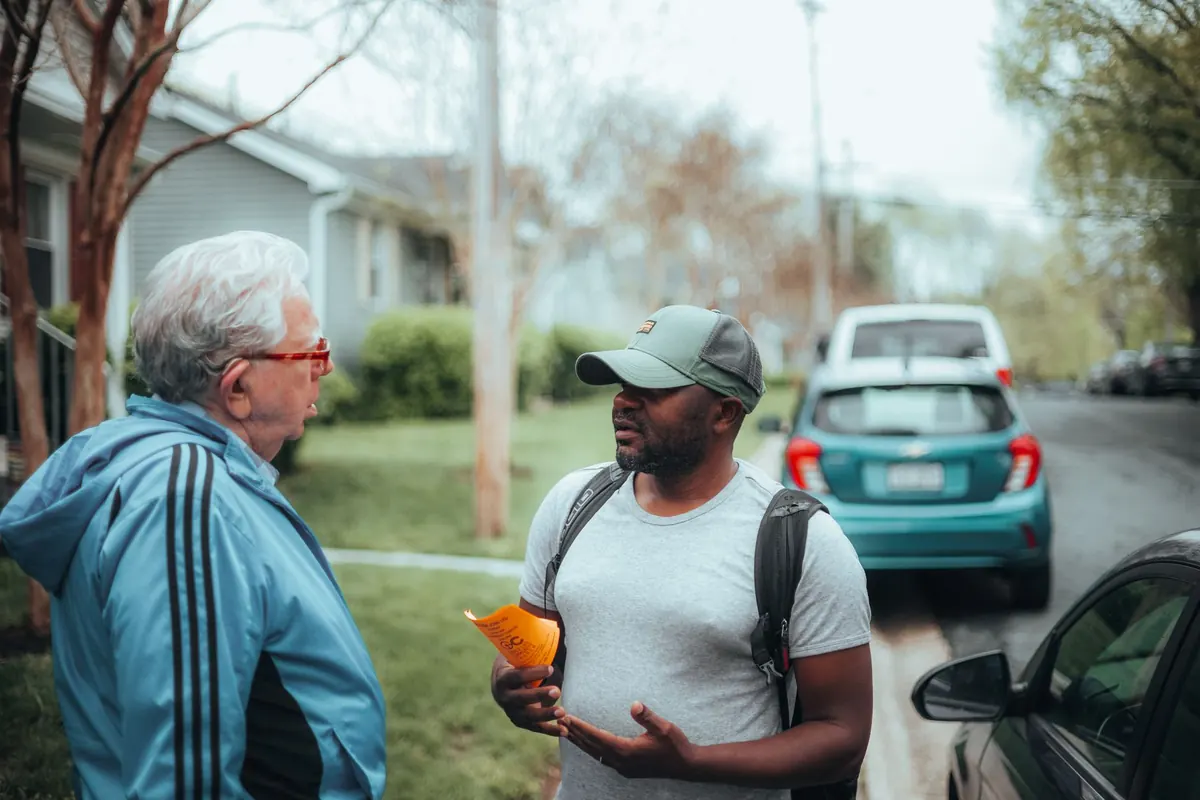
Most neighbourhood watch groups start with something small. A van parked on the same corner three nights running. A shed door found open on a Sunday morning. A parcel lifted from a doorstep while someone was upstairs. One neighbour mentions it, another says "we should keep an eye out", and then everyone goes back inside and nothing happens for six months.
This is about the part after that conversation. Turning a shared worry into a group that still exists next spring takes a little structure, a few ground rules and a reason for people to turn up twice. None of it is complicated. Most of it is just deciding things out loud instead of assuming everyone agrees.
What a watch actually does
A neighbourhood watch is a group of residents who agree to pay attention and report what they see. That is the whole job. The visible results tend to be dull and real: a street where bins are put out and brought in, hedges cut back, a porch light fixed, a car nobody recognises noticed and passed on rather than ignored.
It is not a patrol, a security firm or a substitute for the police. It is also not a licence to knock on a stranger's door and ask what they are doing here. Groups that muddle those things fall apart quickly, usually after one argument. Say plainly at the first meeting what the group is for, and say what it is not for.
Start with three neighbours, not thirty
Ambitious launches fail. A group that begins as a whole-quarter campaign with a Facebook page and a committee tends to peak at the second meeting. Start with the four or five households closest to you — the people you would actually knock for at 11pm.
Once those households are in, the group has a shape and a track record, and it is far easier to extend down the road in twos and threes.
- Pick your patch. One street, one side of a street, or one block of flats. Small enough that everyone can picture it.
- Talk in person first. A note through the door works, but a two-minute conversation on the pavement works better. Ask what they have noticed, not whether they want to join a committee.
- Write one sentence of purpose. "We look out for each other's homes and report anything odd to the police." That is enough to begin with.
- Keep a simple list. Names, house numbers, and how each person prefers to be contacted. Ask before you add anyone.
- Set a date. Even if it is four people around a kitchen table. A date beats good intentions.
Getting the police involved
Approach the police before you publicise anything. Most areas have a community policing team, a dedicated officer for watch schemes, or a crime prevention contact. Look up the non-emergency number for your area — in the UK that is 101 — and ask to be put through to the team covering your street. Say you are starting a watch group and want to know what support exists.
Useful things to ask for:
- Whether there is an existing watch scheme you can join or register with, and what that involves.
- How they would like reports sent, and what information is genuinely useful to them.
- Whether signage, window stickers or property marking kits are available locally.
- Whether an officer can come to a meeting, even briefly. Attendance from one officer early on does more for turnout than any poster.
Be clear with everyone in the group about the difference between an emergency and a report. If a crime is happening now, or someone is in danger, that is an emergency call. Anything else — a broken window, a suspicious vehicle that has moved on, a theft discovered hours later — goes to the non-emergency route. Nobody in the group should ever approach a person they think is committing a crime. Watching and reporting is the job; intervening is not.
Rules around watch schemes, signage and handling neighbours' contact details vary between areas and can change. Ask your police contact what the current requirements are, and take proper advice if you are unsure.
Running a meeting people come back to
Keep it to an hour, start on time, finish on time, and circulate a short agenda beforehand. Three items is plenty: what has happened since last time, one thing the group is doing next, and anything the police want to pass on.
Venues matter less than reliability. A front room, a back room of a pub, a community hall, a shared garden in summer. Somewhere warm with enough chairs and no need to book six weeks ahead.
A format that works for a first meeting: fifteen minutes of introductions and why each person came, twenty minutes with a police officer or a guest, twenty minutes deciding two or three concrete actions, five minutes agreeing the next date. Choose one person to take notes and keep them to a single page. Rotate who chairs it, so the group does not quietly become one person's project.
Set boundaries before you need them
Ground rules written down early are much easier to point at later than rules invented after a disagreement. Keep them short and pin them to the top of whatever channel you use.
- No confronting anyone. Report, do not intervene.
- No filming or photographing people on private property, and no sharing images of individuals in the group chat.
- No descriptions based on someone simply looking different. Suspicious behaviour is behaviour: trying door handles, looking into windows, taking things that are not theirs.
- No naming and shaming, and no speculation about who might be responsible for something.
- Neighbours' phone numbers and addresses stay inside the group. Anyone can ask to be removed at any time.
- No political campaigning, no fundraising pressure, no side projects bolted on.
If a rule does not make a neighbour safer or make somebody's job easier, it probably does not belong in writing.
Contact lists are personal data, and how you may hold and use them depends on where you live. Ask your police liaison or a legal adviser before you build anything more elaborate than a shared sheet of willing volunteers.
A communication plan that lasts past week three
Choose one main channel and stick to it. The one to pick is the one the least confident person in the group can use comfortably — that might be a group text rather than an app, or a printed sheet through doors for two households who would rather not be online at all.
Split messages into two kinds. Alerts are rare and factual: what happened, where, when, and whether it has been reported. Everything else — upcoming meeting, a reminder about locking side gates, a thank-you — goes into a single weekly digest from one named coordinator. A group chat that pings forty times a day gets muted, and a muted group is not a watch.
Keep a printed contact sheet for anyone who wants one, review the list twice a year, and delete anything you no longer need.
Start small and keep it steady
Pick a date in the next fortnight, invite four households, and set one goal for the first month: a lighting check along the back alley, a shared list of useful numbers, a reminder about holiday cover for each other's homes. That is a functioning watch group.
Then meet again. Success looks less like a crime map and more like a street where people know each other's names, notice when something is out of place, and know exactly who to tell. Review it once a year, thank the people who do the boring work, and let it stay small enough to keep going.
Photo: Samuel Peter / Pexels