Your first stall at a Bluebell Quarter market is usually a mix of nerves and improvisation. Most people get the product right, then discover the harder part: everything happening around the table. The stallholders who look relaxed on their fourth or fifth outing aren't more talented. They've simply made a few mistakes already and stopped repeating them. Here are the ones that show up most often at our markets and fairs, and what to do instead.
Pricing that leaves you out of pocket
The most common pricing mistake isn't asking too much. It's asking too little, then finding that the stall fee, the card charges, the packaging and the fuel have eaten the margin. Before you print a single label, write down what one item genuinely costs you to make or buy, add a share of the day's costs, and decide what your time is worth. If the number that produces feels too high for the market, the problem is usually the product or the quantity, not the price.
Then put the price where people can see it. An unmarked stall means every conversation starts with a question, and plenty of shoppers won't ask. They'll drift to the next pitch where the answer is written down. A simple board with clear tiers works better than tiny handwritten stickers on thirty items.
One more trap: undercutting your neighbours. If someone three pitches along sells similar candles, dropping your price by a third doesn't win you loyal customers, and it makes the whole row look cheap. Compete on presentation, a bundle, or something the other stall doesn't offer.
Layout and display: make the table easy to buy from
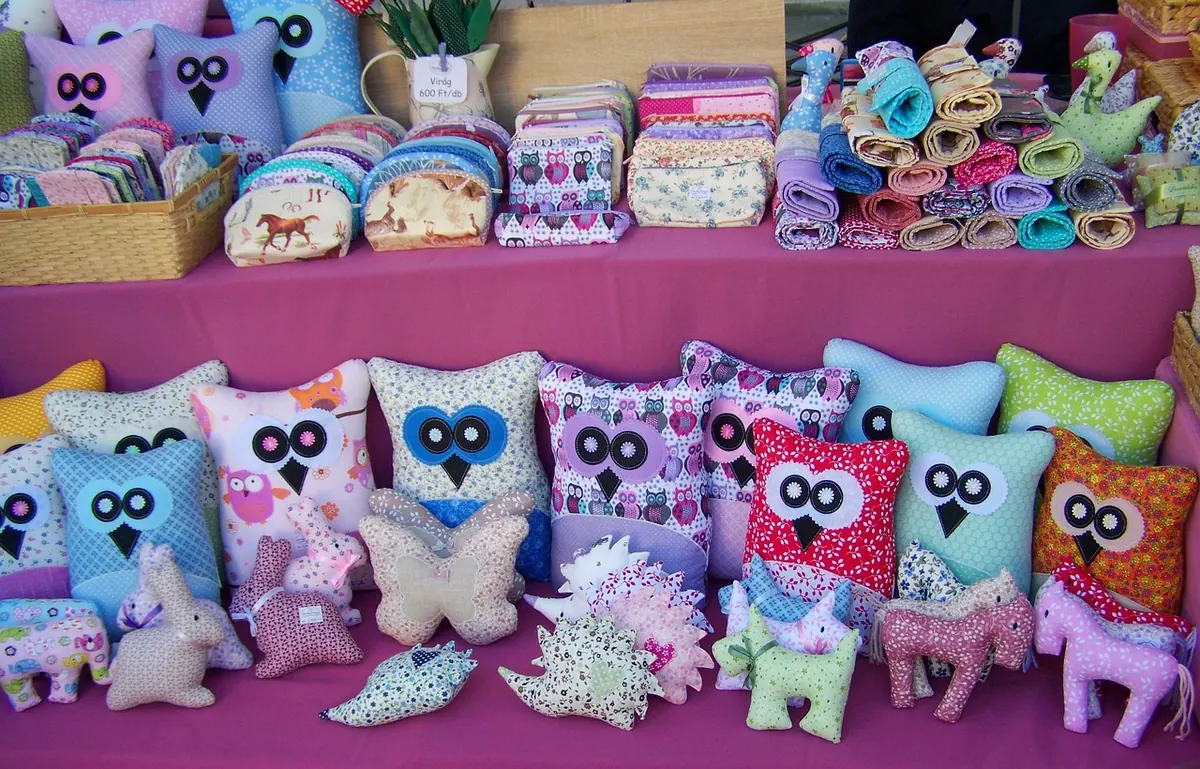
A good display answers three questions in about four seconds: who you are, what you sell, and how much it costs. Most first-timers put everything flat on the table and stand behind it with folded arms. The result looks like a rummage sale and feels hard to approach.
- Build upwards. Crates, boxes and a small shelf bring items closer to eye level. A folded shirt on a riser gets handled far more than one lying flat.
- Stand beside or in front of your table when you can. It's easier to greet people than talking across a wall of stock.
- Sign clearly. Your name, one line about what you do, and prices. If it can't be read from a few steps away, it's too small.
- Keep the aisle clear. Bags, boxes and a leaning banner on the walkway annoy shoppers and organisers alike.
- Stay inside your pitch. Tables creep. A few inches over a taped line is someone else's space, and it gets noticed.
- Pack a repair kit. Cloth, tape, scissors, bin bag, spare float bag. The stall that can fix a wobbly shelf in thirty seconds keeps selling.
Payment problems that quietly lose sales
Assume nothing about how people will pay. Some arrive with cash and no card; plenty arrive with a phone and no notes at all. Be ready for both.
Check your card reader before you leave the house, and again on site. Market squares and village halls are not always kind to mobile signal, so know how your reader behaves when the connection drops. Many will queue transactions and process them later, but only if that setting is switched on in advance. Carry a power bank and a spare cable. A dead reader at eleven in the morning is an expensive lesson.
Bring a float with a spread of coins and small notes, and check it at lunchtime before it runs out. Keep a written tally of sales through the day rather than a vague memory at the end of it. If you start trading regularly rather than occasionally, speak to a qualified accountant about what you need to register and record, because the rules depend on your circumstances.
Weather preparation, where wind wins
Rain is inconvenient. Wind ruins days. A gust under a gazebo can lift the whole frame, and a stallholder chasing a canopy across a car park is a dangerous situation, not just an embarrassing one.
- Weigh down the frame at every leg, using proper weights rather than a couple of carrier bags.
- If the forecast is gusting, lower your display, take down banners and side panels, and accept a plainer table.
- Keep stock in lidded boxes and cover cards and paper goods with a clear plastic sheet. Bring a towel; you will need it.
- Heat is its own problem. Chocolate, cosmetics, plants and printed cards all suffer in direct sun, and so do you.
- Ask the organiser before the day what happens in bad weather, including whether refunds apply and who makes the call.
Market etiquette that gets you invited back
Organisers remember two things: stallholders who are easy to work with, and stallholders who are not. Arrive at the time you were given, unload where you were asked, and move your car when you're told to. If you're running late, message rather than hoping nobody notices. If you can't come at all, say so as early as you can; a no-show leaves a gap that everyone else has to work around.
Don't pack up early. The last hour is often when shoppers who've been to everything else finally reach your table, and a half-empty row tells people the market is finishing. If you must leave on time, start tidying quietly five minutes before the end, not forty.
Be considerate of your neighbours, too. Loud music, an overpowering scent or a hard sell from the edge of your pitch makes it harder for the people either side of you to trade. Don't quiz other stallholders about their takings, and never set up in someone's pitch because they arrived later than you did.
A couple of things are worth sorting before the day itself. Check whether the organiser asks for public liability insurance or any other documents, and if you're selling food or drink, ask the organiser and your local council what applies to you. Requirements vary by event and by area, so get it confirmed rather than relying on a friend's experience.
A short checklist before you pack the car
- Prices visible on every item, or a clear board.
- Float in small denominations, plus a charged reader and power bank.
- A sign with your name and one line about what you sell.
- Weights for the gazebo, a cover for wet weather, water and shade for hot days.
- The organiser's number saved in your phone, and a plan for a change in the weather.
None of this needs experience. It needs thinking through the day in advance and being decent to the people around you. Get those basics right and your second Bluebell Quarter market will feel noticeably easier than the first.
Photo: ArmbrustAnna / Pixabay